How to Compose an Effective Cover Letter and International Resume
Sending your local resume and a generic cover letter is frequently insufficient when applying for jobs abroad; you must compose an effective cover letter and international resume. Employers worldwide look for well-crafted, customized documents that demonstrate not only your qualifications but also your awareness of local professional and cultural norms. Knowing how to write a strong international resume and cover letter can greatly increase your chances of getting the interview, regardless of whether you’re applying for a job in Canada, Japan, Australia, or any other nation. We will walk you through best practices, advice, and typical mistakes to avoid when preparing your international job application materials in this blog.
1. Why Are Strong Resume and Cover Letter Important?
Your cover letter and resume (also known as your CV) serve as an employer’s initial impression of you. They outline your career path and demonstrate your suitability for the position.
Resume: Provides an overview of your accomplishments, education, work history, and skills.
A cover letter: Introduces you, outlines your goals, and connects your background to the job specifications.
These documents are essential for overcoming cultural barriers and showcasing your professionalism and flexibility when applying for jobs abroad.
Section 1: Creating a Global Resume
Section 2: Recognize How Resume Formats Vary by Nation
Globally, resume expectations differ greatly. Here are some instances:
United States and Canada: Resumes are usually one or two pages long, succinct, accomplishment-focused, and devoid of personal information such as age, marital status, or photos. In Europe, particularly in Germany, France, and Spain, resumes are typically longer, two to three pages, and may include a photo, birthdate, and occasionally a more chronological format. Asia (China, India, Japan): In Japan, some countries require very formal, structured resumes that occasionally include personal information and even handwritten elements. Similar to North America, Australia and the UK typically permit a little more information about professional summaries and skill sets.
Tip: Before formatting your document, find out the resume standards of the target nation.
Select the Appropriate Format for Your Resume
There are three primary categories of resume formats:
Chronological: Reverse chronologically arranges work experience. Having a steady work history is ideal.
Functional: Places more emphasis on abilities and proficiencies than employment history. helpful if you have gaps in your career or are changing careers.
Combination: Blends functional and chronological components.
The majority of foreign employers favor combination or chronological formats.
Incorporate Crucial Sections
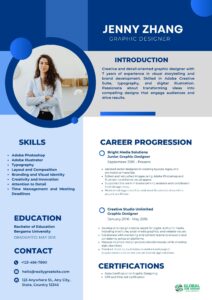
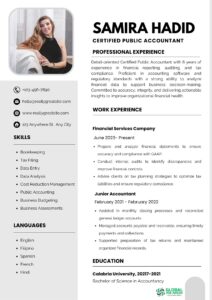
Your resume should contain the following, regardless of format:
- Contact details include full name, country-coded phone number, email address, and link to LinkedIn profile.
- Unless it is customary in the nation, refrain from including superfluous personal information such as marital status or religious affiliation.
- A succinct two- to three-sentence statement that highlights your experience and the qualities you bring to the position is your professional summary or objective.
- Work Experience: Provide a list of your jobs, including the names of the companies, the locations, the dates, your job title, and bullet points outlining your duties and accomplishments.
Education: Provide a list of degrees, certifications, schools, and years of graduation.
Skills: Emphasize languages, technical proficiency, and other pertinent abilities. - Extra Sections (if applicable): Awards, volunteer work, publications, and professional associations.
Make Use of Job Description Keywords
Applicant Tracking Systems (ATS) are used by many businesses to screen resumes. To circumvent these systems:
- Go over the job description carefully.
- Naturally include pertinent keywords and phrases in your resume.
- Avoid using unusual job titles that could confuse an applicant tracking system (ATS) and instead use standard ones.
Pay Attention to Your Tone and Language
- Write in professional, lucid English (or the nation’s official language).
- Make use of action verbs, such as “developed,” “managed,” and “improved.”
- When feasible, use numbers to quantify accomplishments (e.g., “Increased sales by 30%”).
- Steer clear of jargon that may be unfamiliar to people abroad.
Tips for Formatting and Design
- Use standard fonts in sizes 10–12, such as Arial, Calibri, or Times New Roman, and keep the design neat and polished.
- If you’re applying to a creative industry, stay away from graphics, images, and colors.
- Unless otherwise noted in the job posting, save and submit as a PDF.
2. Crafting a Successful International Cover Letter
You have the chance to establish a personal connection and highlight your qualifications in a cover letter. Here’s how to create one that is effective everywhere.
Make a Powerful Opening
If at all possible, address the letter to a specific individual. Use a neutral greeting such as this if the name is unavailable:
“Dear Hiring Manager,” “Dear Recruitment Team,”
Give a strong opening statement outlining the job for which you are applying and briefly explaining your interest.
Tailor to Every Job and Nation
Steer clear of generic cover letters. Customize every letter by:
Bringing up the name of the business; Citing particular job requirements; Demonstrating an understanding of the market and company culture.
Effectively Format Your Cover Letter
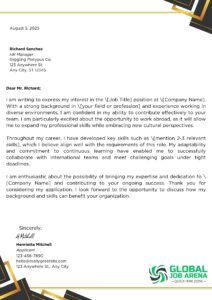
Paragraph 1: Introduction and position applied for. Paragraph 2: Your accomplishments and relevant experience—link them to the job. Paragraph 3: Your reasons for wanting to work for this company and how you fit in with its culture. Paragraph 4: Call to action—thank them and express your desire to talk further.
Emphasize Cultural Awareness and Adaptability
Candidates with cultural sensitivity and flexibility are highly valued by foreign employers. Bring up:
- Experience collaborating with a variety of teams.
- Proficiency in the language; a readiness to move or travel.
Be Brief and Professional
Keep your cover letter to one page; Speak in a formal, courteous manner; Steer clear of slang or an excessively informal tone.
Conclude with a polished closing
Employ sign-offs such as
“Best regards,” “Sincerely,”
Next, add your entire name.
3. Extra Advice for Applying for Jobs Abroad
Comply with work permit and visa requirements
Certain nations require you to disclose your visa status or work eligibility. In your cover letter, briefly state whether you currently hold a valid work permit or visa.
Provide Information on Language Proficiency
Make sure to emphasize in both your cover letter and resume that you speak more than one language, particularly the language of the nation you are applying to.
Verify Legal Requirements and Cultural Nuances
Unless it is customary in that country, do not include pictures, political or religious affiliations, or sensitive personal information. Before applying, find out which countries require specific certificates or notarized documents.
Carefully proofread
Errors can leave a negative impression. Ask a native speaker to proofread your writing or use tools like Grammarly.
4. Sample of General Cover Letter